
Making money on YouTube no longer requires showing your face or becoming a personality. In 2026, faceless YouTube channels have become one of the most practical ways for people in the USA, Canada, UK, and Australia to earn online.
These channels rely on stock footage, AI tools, voiceovers, and strong storytelling instead of personal appearance. Many creators now prefer this route because it offers more privacy and flexibility.
This guide walks you through how faceless YouTube channels work today, the realistic path to building one, and the steps that actually matter. You will learn about niches, tools, monetization options, and common pitfalls. Results always depend on consistency, skill, effort, and market demand—there are no guarantees.
What Is a Faceless YouTube Channel?
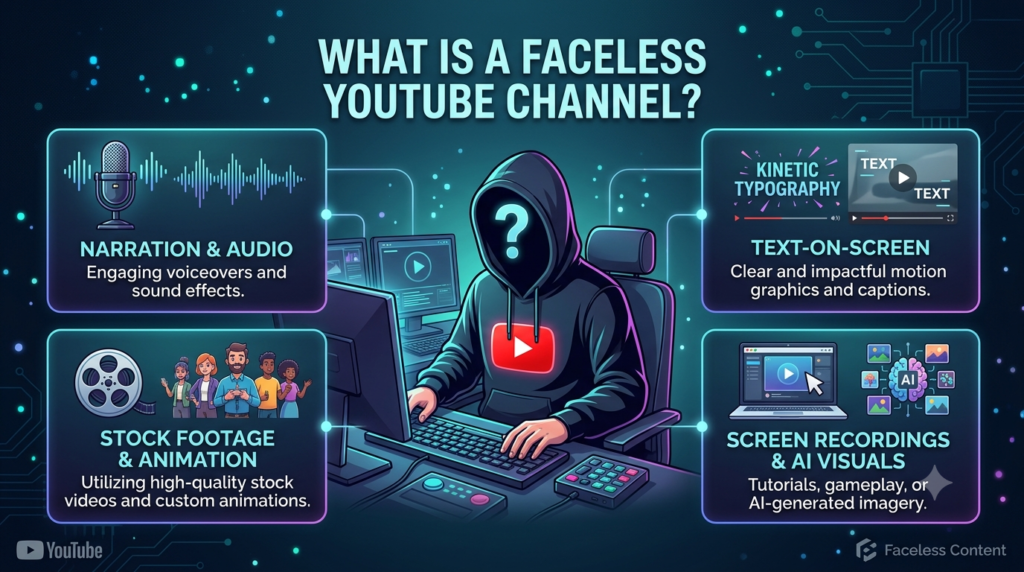
A faceless YouTube channel is any channel that does not show the creator on camera. Content is built using narration, text-on-screen, stock videos, animations, AI-generated visuals, or screen recordings.
These channels cover topics like finance explainers, true crime, motivational stories, tech reviews, history, and lifestyle advice. The focus stays on the information or entertainment value rather than the person behind the channel.
In 2026, improved AI tools have made high-quality faceless content easier and faster to produce than ever before.
Why Faceless Channels Still Work in 2026
Audience attention has shifted toward useful or entertaining content rather than personality-driven videos in many niches. Viewers often care more about the information than who is delivering it.
Privacy is another major reason. Many people simply do not want their face or personal life public. Faceless channels also allow creators to work from anywhere and scale production with tools instead of filming every video themselves.
Competition exists, but channels that choose clear niches, consistent quality, and smart packaging still grow. Success depends on research, execution, and patience more than anything else.
Step-by-Step Guide to Starting a Faceless Channel
1. Choose a Profitable and Sustainable Niche
Pick a topic that has steady search demand and advertising potential. Popular faceless niches in 2026 include personal finance tips, side hustle ideas, true crime stories, historical events, self-improvement, technology explainers, and calm lifestyle or productivity content.
Research what already performs well using YouTube search suggestions and tools like TubeBuddy or VidIQ. Avoid overly saturated topics unless you can offer a fresh angle or better presentation.
Best For: Beginners who want long-term growth potential.
Quick Tip: Choose something you can research and talk about consistently for months.
2. Set Up Your Channel Properly
Create a clear channel name, professional banner, and simple logo. Write a concise channel description that tells viewers what to expect. Enable monetization features early so you understand the requirements.
Use a dedicated Google account and keep branding consistent across videos and thumbnails. A clean, trustworthy look helps viewers take the channel seriously even without a face.
3. Plan Content and Scripts
Strong scripts matter more than fancy visuals. Write or generate clear, engaging scripts that hold attention in the first 15–30 seconds. Structure videos with a hook, useful body content, and a soft call to action.
Many creators use AI writing tools for first drafts and then edit heavily for natural flow and accuracy. Always fact-check information before publishing.
4. Create Videos Using Modern Tools
In 2026, creators commonly combine:
- AI voiceovers (natural-sounding English accents)
- Stock footage and AI image/video generators
- Simple editing software such as CapCut, DaVinci Resolve, or Premiere Pro
- Text overlays and background music
Focus on clean visuals, good pacing, and clear audio. High production quality builds trust faster than flashy effects.
5. Optimize for Discovery
Write searchable titles and detailed descriptions. Design clickable but honest thumbnails. Use relevant tags and end screens. Consistency in posting schedule also helps the algorithm understand your channel.
Study what titles and thumbnails work in your niche without copying them directly. Small improvements in packaging often lead to better click-through rates.
6. Grow and Monetize
YouTube Partner Program remains the main monetization path once you meet the current thresholds. Additional income can come from affiliate links, digital products, sponsorships, or your own courses and templates once the audience grows.
Diversifying income streams reduces reliance on ad revenue alone. Always disclose affiliate relationships clearly.
Tips for Beginners
Start with one niche and stick to it for at least three to six months. Switching topics too early prevents the channel from gaining traction.
Batch your work. Script several videos in one sitting, generate assets in another, and edit in a third session. This approach saves time and reduces decision fatigue.
Study analytics weekly. Look at audience retention graphs to see where viewers leave and improve those sections in future videos.
Watch successful faceless channels in your niche and note what keeps you watching. Learn from their structure without imitating their exact style.
Treat the first 20–30 videos as practice. Quality improves with repetition, and early videos rarely perform as well as later ones.
Common Mistakes to Avoid
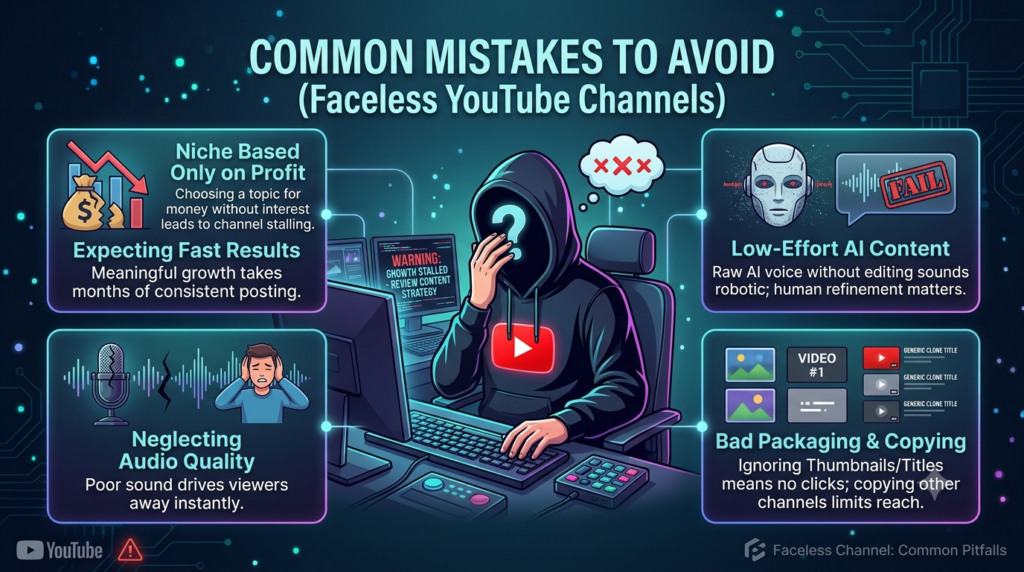
Choosing a niche only because it looks profitable.
If you cannot research or stay interested in the topic, the channel usually stalls.
Publishing low-effort, AI-only content without editing.
Viewers and the algorithm notice generic, robotic delivery. Human refinement still matters.
Ignoring thumbnails and titles.
Even excellent videos struggle if people do not click.
Expecting fast results.
Most channels take months of consistent posting before meaningful growth appears.
Copying other channels too closely.
YouTube can limit reach when content feels derivative. Add your own research, angle, or presentation style.
Neglecting audio quality.
Poor sound drives viewers away faster than average visuals.
Bonus Tips
Use tools like TubeBuddy or VidIQ for keyword research and competitor insights. They help identify opportunities that pure guesswork misses.
Consider creating a simple free lead magnet, such as a checklist or short guide, and mention it in videos. This builds an email list that you own.
Test different video lengths. Some niches perform better with 8–12 minute videos, while others work well with shorter formats.
Keep a content calendar. Planning two to four weeks ahead reduces stress and improves consistency.
Explore related income streams early, such as recommending tools you actually use. Audience trust grows when recommendations feel genuine.
Stay updated on YouTube policy changes. Monetization rules and content guidelines evolve, and staying informed protects your channel.
Conclusion
Faceless YouTube channels remain a realistic option in 2026 for people who want to create content without appearing on camera. The combination of better AI tools, strong niches, and consistent effort has lowered some of the old barriers.
Success still requires research, regular publishing, and continuous improvement. No method works for everyone, and results vary based on skills, time invested, and market conditions.
Start with one clear niche, focus on useful videos, and improve a little with each upload. Save this guide, pick your first topic this week, and begin. The channels that grow are usually the ones that simply keep going.
Frequently Asked Questions (FAQs)
Do I need expensive equipment to start a faceless YouTube channel?
No. A computer, free or affordable editing software, and good AI or stock resources are enough for most beginners.
How long does it take to monetize a faceless channel?
It varies widely. Some channels reach monetization requirements in a few months with strong consistency, while others take longer. There is no fixed timeline.
Can I use AI voices and still get monetized?
Yes, many channels do. The key is making the content original, valuable, and compliant with YouTube policies. Heavy reliance on unedited AI content can hurt performance.
What are the best niches for faceless channels in 2026?
Finance tips, self-improvement, true crime, history, technology explainers, and productivity content continue to attract viewers and advertisers when done well.
Is faceless YouTube still worth it with so much competition?
Competition exists in almost every online method. Channels that focus on clear value, consistent quality, and smart packaging still find audiences.
Should I post every day?
Daily posting is not required. Most successful faceless creators focus on sustainable consistency, such as two to four solid videos per week, rather than daily low-quality uploads.
Can I run a faceless channel as a side project?
Yes. Many people treat it as a side hustle and grow it gradually while working other jobs. Progress is usually slower but still possible with regular effort.