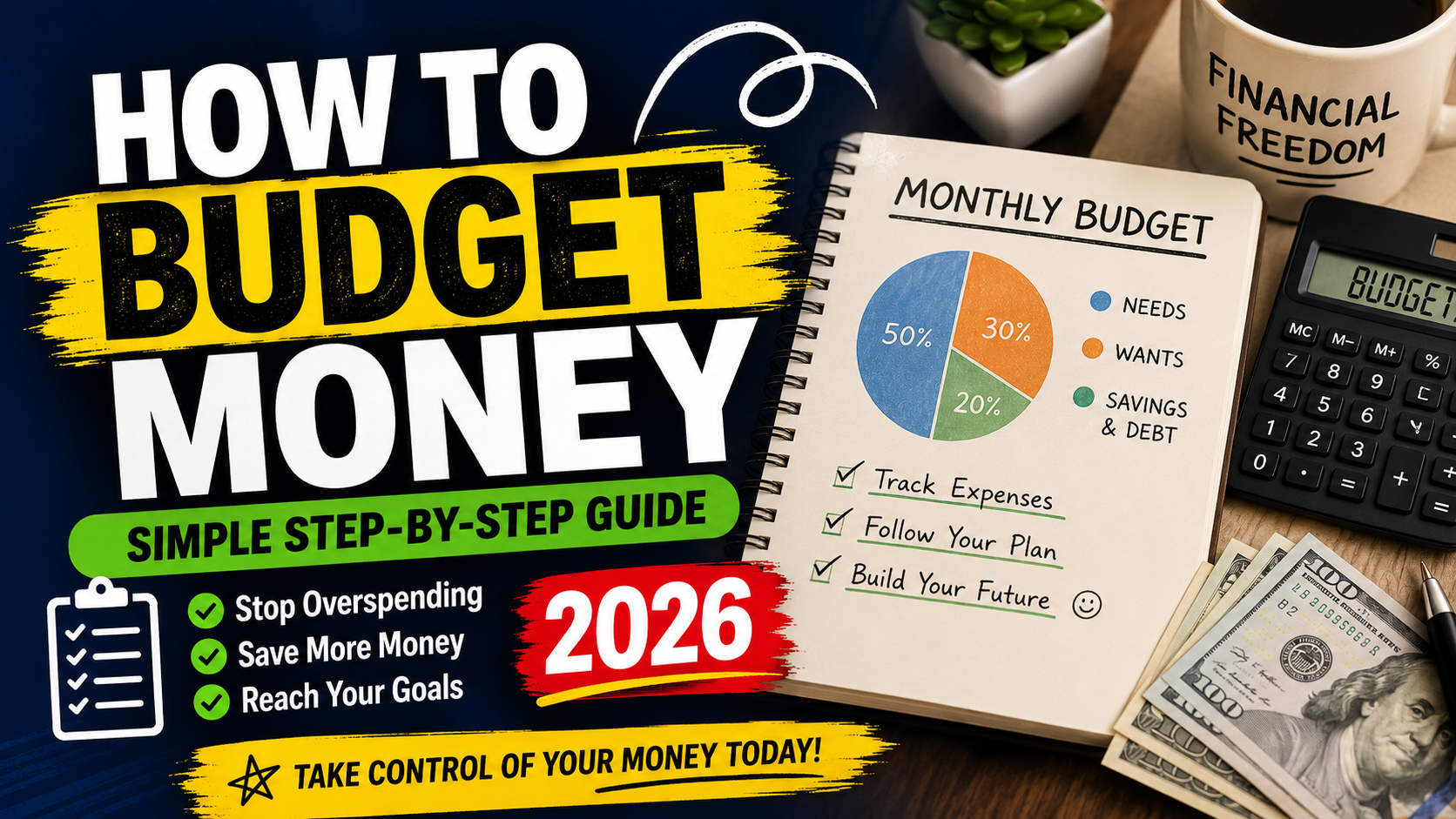
Many people feel like their money disappears every month without knowing exactly where it went. A budget fixes that problem. It is simply a clear plan for how you will use your income so you can cover bills, enjoy life, and still save for the future.
Learning how to budget money does not require complicated spreadsheets or extreme cutbacks. The right system helps you spend with intention, reduce stress, and reach your goals faster. Whether you want to build an emergency fund, pay off debt, or stop living paycheck to paycheck, a budget is the foundation.
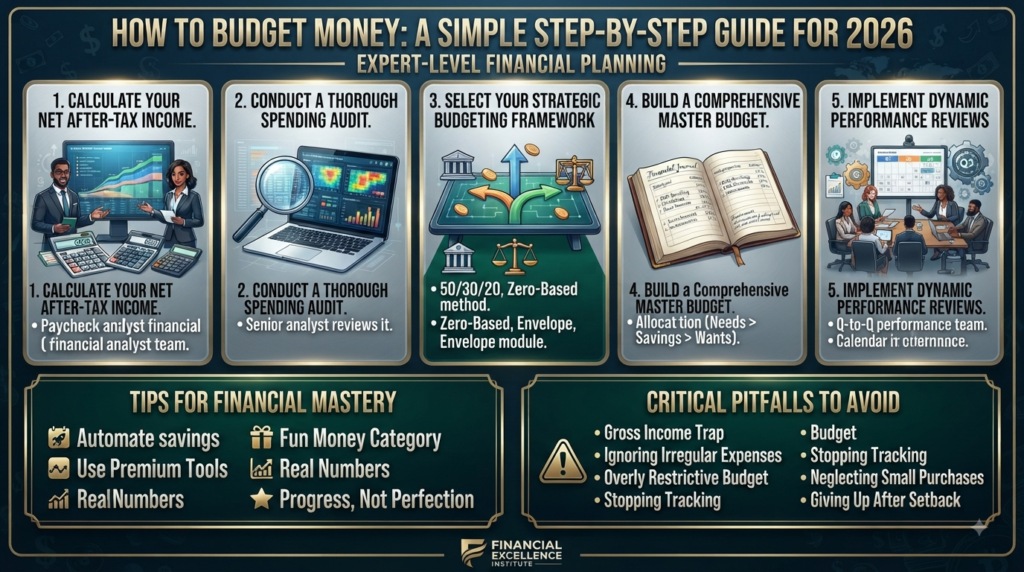
In this guide you will learn a practical step-by-step process, the most popular budgeting methods, common mistakes to avoid, and tips that make sticking to a budget much easier.
Ways to Budget Money:
1. Calculate Your After-Tax Income
Start with the money that actually hits your bank account each month. This is your take-home or net pay after taxes, insurance, and retirement contributions.
If you have side income, freelance work, or irregular pay, average the last three months to get a realistic monthly figure. Use this number as the foundation of your budget.
Best For: Everyone starting a budget
Quick Tip: Add back any automatic deductions (like 401(k) contributions) if you want a fuller picture of your total income.
2. Track Your Current Spending
Look at your bank and credit card statements from the past 30–60 days. Write down every expense and group them into categories such as housing, groceries, transportation, dining out, subscriptions, and entertainment.
This step often surprises people. You may discover you spend far more on food delivery or small purchases than you realized.
Best For: Getting an honest view of your habits
Quick Tip: Do this for at least one full month before creating your official budget.
3. Choose a Budgeting Method
Pick a system that matches your personality and goals. The three most popular options in 2026 are:
50/30/20 Rule
- 50% of take-home pay → Needs (housing, utilities, groceries, insurance, minimum debt payments)
- 30% → Wants (dining out, entertainment, hobbies)
- 20% → Savings and extra debt payments
This is the easiest method for beginners.
Zero-Based Budgeting
Every dollar gets a specific job until your income minus expenses equals zero. Ideal if you want maximum control or are focused on paying off debt.
Envelope / Cash Stuffing Method
You assign cash to physical or digital envelopes for categories like groceries and entertainment. When the envelope is empty, spending in that category stops.
Best For: Matching the method to your lifestyle
Quick Tip: Start with 50/30/20 if you are new. You can always switch later.
4. Create Your Actual Budget
List your income at the top. Then allocate money to each category based on the method you chose. Make sure essential needs are covered first, then savings, then wants.
Include irregular expenses (car insurance, annual subscriptions, holiday gifts) by dividing the yearly cost by 12 and setting that amount aside each month.
Best For: Turning your plan into clear numbers
Quick Tip: Leave a small buffer category for unexpected small costs.
5. Adjust and Review Regularly
A budget is not set in stone. After the first month, review what worked and what did not. Move money between categories if needed.
Check your budget weekly for the first few months, then switch to a monthly review once you feel comfortable.
Best For: Making the budget sustainable long-term
Quick Tip: Schedule a 15-minute money check-in every Sunday.
Tips for Beginners
Automate your savings the day after payday so the money leaves your account before you can spend it.
Give yourself a small “fun money” category. A budget that feels too strict usually fails.
Use a free app or simple spreadsheet. Popular options include YNAB, Monarch Money, or a basic Google Sheet.
Start with your real numbers, not ideal ones. Honesty in the first month makes everything easier later.
Focus on progress, not perfection. Even a rough budget is better than no budget.
Common Mistakes to Avoid
Using gross income instead of take-home pay.
This makes your budget look better than it really is and leads to overspending.
Forgetting irregular expenses.
Annual or quarterly bills can destroy a monthly budget if you do not plan for them.
Making the budget too restrictive.
Cutting every enjoyable expense usually causes people to quit within weeks.
Not tracking spending after creating the budget.
A budget only works if you check whether you are following it.
Ignoring small purchases.
Daily coffees, snacks, and apps can add up to hundreds of dollars each month.
Giving up after one bad month.
Almost everyone overspends in the first month or two. Adjust and keep going.
Bonus Tips
Pay yourself first. Transfer money to savings or debt payments automatically before you budget for anything else.
Build a starter emergency fund of $1,000 as quickly as possible. This prevents small surprises from becoming debt.
Review subscriptions every three months and cancel anything you no longer use.
If your income is variable, base your budget on the lowest recent month and treat extra income as bonus savings.
Celebrate small wins. When you stick to your budget for a full month, acknowledge the progress.
Conclusion
Learning how to budget money is one of the most powerful financial skills you can develop. It gives you clarity, reduces stress, and helps you move toward your goals instead of just reacting to bills.
Start simple. Calculate your income, track your spending for one month, choose a method like 50/30/20, and review regularly. You do not need a perfect budget — you need a system you will actually use.
Take the first step today. Open a notes app or spreadsheet, write down your take-home pay, and begin. Your future self will thank you.
Frequently Asked Questions (FAQs)
What is the easiest way to budget money for beginners?
The 50/30/20 rule is the simplest starting point. It divides your take-home pay into needs (50%), wants (30%), and savings/debt (20%).
How much should I save each month?
Aim for at least 20% of your take-home pay if possible. If that feels too high right now, start with 10% and increase gradually.
What if my needs are more than 50% of my income?
This is common in high-cost areas. Adjust the percentages (for example 60/20/20) and look for ways to reduce housing or transportation costs over time.
Do I need a budgeting app?
No. A notebook or free spreadsheet works fine. Apps can make tracking easier once you understand the basics.
How often should I review my budget?
Check weekly when you first start. Once it becomes a habit, a monthly review is usually enough.
Can I still have fun while budgeting?
Yes. A good budget includes money for enjoyment. The goal is intentional spending, not deprivation.
What if I go over budget one month?
Adjust the next month and keep going. One imperfect month does not mean the system failed.